
Planning a pilgrimage to Sabarimala Sree Dharma Sastha Temple requires more preparation than visiting many other major temples in India because Sabarimala is not open every day of the year.
The temple remains open for an extended period during the main Mandala–Makaravilakku pilgrimage season, when lakhs of devotees travel to Sabarimala for darshan. Outside this peak season, the temple opens only on specific dates, including the beginning of Malayalam months, Vishu, and selected festival occasions. For this reason, checking the official Sabarimala temple opening dates should be the first step before booking a train, flight, hotel, or other travel arrangements.
For the 2026–27 Sabarimala pilgrimage season, pilgrims should also pay close attention to the Sabarimala Virtual Queue booking system. The Travancore Devaswom Board has stated that Virtual Queue registration is mandatory for pilgrims visiting Sabarimala. The Virtual Q should not be confused with a paid VIP darshan ticket. It is an official crowd-management and pilgrimage access system designed to regulate the large number of devotees visiting the shrine.
A well-planned Sabarimala journey involves much more than choosing a travel date. Pilgrims may need to understand the Virtual Queue booking process, official Sabarimala pooja timings, Neyyabhishekam, current prasadam prices, the traditional 41-day vratham, preparation of the Irumudi Kettu, rules related to climbing the sacred Pathinettam Padi or 18 steps, and the Pamba to Sannidhanam trek.
This guide brings these important details together so pilgrims can plan their journey with fewer surprises. It also explains Sabarimala spot booking, pilgrimage-season planning, important temple procedures, and common mistakes that can create problems during the journey. Whether you are visiting Sabarimala for the first time or returning during the 2026–27 Mandala Makaravilakku season, understanding these details in advance can make the pilgrimage smoother, safer, and better organized.
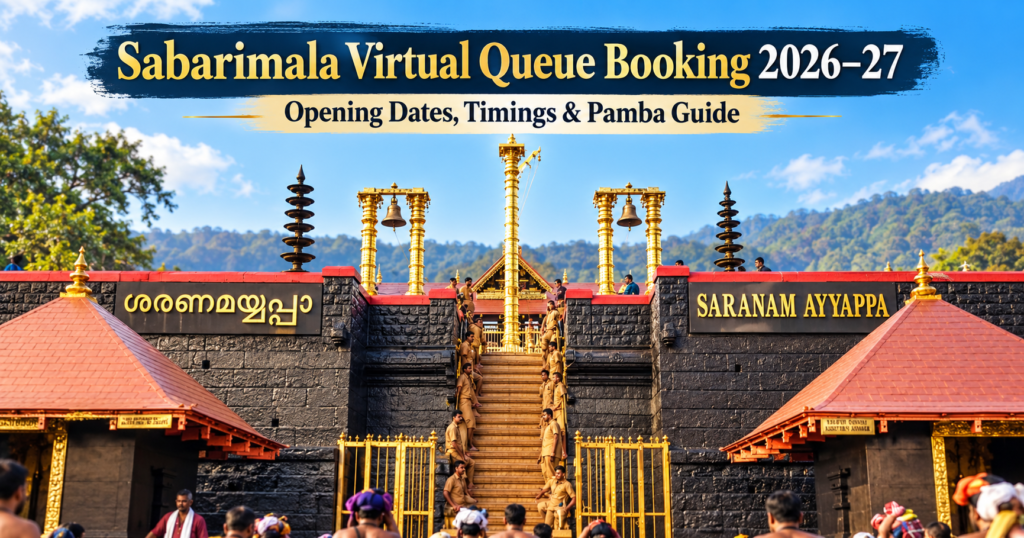
First Check: Is Sabarimala Open on Your Travel Date?
Before planning your journey, the most important thing to confirm is whether Sabarimala Temple is open on your selected travel date. Unlike temples that remain open throughout the year, Sabarimala Sree Dharma Sastha Temple follows a specific opening calendar linked to major pilgrimage seasons, Malayalam monthly poojas, and selected festivals.
The temple generally opens during:
- Mandala Pooja season
- Makaravilakku season
- Vishu
- The beginning of Malayalam months
- Selected annual festivals and special poojas
Official Sabarimala information also makes it clear that the shrine is not open throughout the year. This makes checking the latest Sabarimala temple opening dates essential before finalizing transport, accommodation, or other travel arrangements.
What This Means for a 2026 Sabarimala Trip
If you are planning to visit in February, June, August, or any other month outside the main Mandala–Makaravilakku season, do not assume that reaching Pamba automatically means you can continue to Sannidhanam for darshan.
First confirm whether your travel date falls within an officially announced Sabarimala monthly pooja opening, festival opening, or special pilgrimage period.
The exact Gregorian dates can change from year to year because many Sabarimala openings are based on the Malayalam calendar. This is why a date that worked in one year may not match the same opening period in the next.
General Sabarimala Opening Pattern
| Period | Typical Opening Pattern |
|---|---|
| January | Makaravilakku pilgrimage season usually continues into January |
| February to October | Temple opens during selected Malayalam monthly pooja periods and special occasions |
| Vishu period | Special opening generally takes place around April |
| November | Main Mandala pilgrimage season begins |
| December | Mandala Pooja period is followed by the Makaravilakku season |
| Following January | Makaravilakku pilgrimage and related ceremonies continue |
This pattern is useful for understanding how the Sabarimala opening calendar normally works, but it should not be treated as a fixed date list.
For your 2026–27 Sabarimala pilgrimage, always verify the exact opening and closing dates through the current official Sabarimala or Travancore Devaswom Board calendar before making non-refundable bookings. This is especially important for pilgrims travelling outside the main November-to-January pilgrimage season.
Sabarimala Mandala–Makaravilakku Season 2026-27
The Mandala–Makaravilakku season is the most important and busiest pilgrimage period at Sabarimala Sree Dharma Sastha Temple. It traditionally begins with the Malayalam month of Vrischikam, which falls around mid-November.
The pilgrimage season generally follows this pattern:
Mandala season → about 41 days → short closure → Makaravilakku season
The Mandala pilgrimage usually begins around November 16 or 17 and continues for approximately 41 days, culminating in Mandala Pooja in late December. After a brief closure, Sabarimala normally reopens toward the end of December for the Makaravilakku pilgrimage, which continues into January.
| Pilgrimage Period | General Pattern |
|---|---|
| Mandala season | Begins around mid-November and continues for about 41 days |
| Mandala Pooja | Usually observed in late December |
| Short temple closure | Normally follows Mandala Pooja |
| Makaravilakku season | Reopens around late December and continues into January |
| Makaravilakku / Makara Jyothi period | One of the busiest pilgrimage periods of the year |
These dates are useful for understanding the traditional pilgrimage calendar, but pilgrims planning a Sabarimala trip in 2026-27 should confirm the final opening dates through official sources before booking travel or accommodation. Operational dates, crowd-control measures, booking quotas, and transport arrangements can vary from one pilgrimage season to another.
Planning for Makaravilakku and Makara Jyothi
Pilgrims travelling specifically for Makaravilakku or Makara Jyothi should plan much earlier than those visiting during an ordinary monthly-pooja opening.
This period attracts some of the largest crowds of the entire Sabarimala season. As a result, Virtual Queue slots, transport to Pamba, accommodation, parking, and pilgrim movement toward Sannidhanam can become heavily restricted or fully booked.
If Makaravilakku is the main purpose of your journey, secure your travel plan only after checking the official opening schedule and available Sabarimala Virtual Queue booking slots.
Sabarimala Virtual Queue Booking 2026-27
The Sabarimala Virtual Queue, commonly called Virtual Q, is the official advance booking and crowd-management system used for pilgrims travelling to Sannidhanam.
Its purpose is to regulate the number of devotees arriving during particular dates and time windows, especially during the busy Mandala–Makaravilakku season.
One important distinction should be clear:
Sabarimala Virtual Queue booking is not a VIP darshan or paid special-entry ticket.
A confirmed Virtual Q slot allows a pilgrim to travel within the allotted pilgrimage window and enter the regulated darshan flow. It does not provide priority darshan or guarantee that darshan will happen at an exact minute.
Sabarimala Virtual Queue Booking Price
The Sabarimala Virtual Q booking itself is free.
Virtual Queue fee: ₹0
Pilgrims therefore do not need to pay an agent simply to obtain a normal Virtual Queue slot.
Other services may involve separate charges, including:
- Prasadam
- Temple offerings and poojas
- Accommodation
- Bus or other transport services
- Additional facilities booked separately through authorised systems
Be cautious if someone advertises a paid or “guaranteed” Virtual Queue slot outside the official booking process.
Official Sabarimala Virtual Queue Website
The official portal used for Sabarimala Virtual Queue booking is:
https://sabarimalaonline.org/#/darshanAvailability
Pilgrims can also check official pilgrimage information, temple notices, and related updates through:
sabarimala.kerala.gov.in
For a 2026-27 Sabarimala pilgrimage, use official portals whenever possible rather than third-party booking pages, social-media messages, or agents claiming to provide confirmed entry.
How to Book Sabarimala Virtual Queue Online
The online booking process is straightforward, but pilgrim details should be entered carefully because identification may be checked during the journey.
Step 1: Open the Official Sabarimala Booking Portal
Visit sabarimalaonline.org and access the Virtual Queue booking facility.
Avoid unrelated websites or individuals claiming to sell guaranteed Sabarimala darshan slots.
Step 2: Register or Log In
Create a pilgrim account if you are using the system for the first time, or sign in with your existing account.
Keep the registered mobile number accessible because OTP or account verification may be required during the booking process.
Step 3: Select Virtual Queue or Darshan Booking
Open the Virtual Queue / Darshan booking option from the available pilgrimage services.
The exact wording or interface may change, but the booking should always be completed through the official system.
Step 4: Select Your Sabarimala Visit Date
Choose your preferred pilgrimage date from the available calendar.
If the date you want is not available, it may mean:
- Sabarimala is not open on that date
- Booking for that opening period has not been released yet
- The available Virtual Queue quota is already full
Do not immediately assume that an unavailable date means all pilgrimage options are permanently closed.
Step 5: Choose an Available Time Slot
Select one of the available Virtual Q time slots shown for your date.
The allotted slot should be treated primarily as a reporting and crowd-management window. Actual darshan timing can vary depending on crowd density, security checks, weather conditions, and movement along the Pamba–Sannidhanam route.
Step 6: Enter Pilgrim Details Carefully
Enter the required pilgrim information exactly as requested.
Check the spelling of names, identification details, age, and other required fields before proceeding.
Pilgrims should carry the same valid identification document associated with the booking wherever required.
Step 7: Review and Confirm the Booking
Before submitting the reservation, verify:
- Pilgrim name
- Travel date
- Virtual Q slot
- Identification details
- Number of pilgrims included in the booking
Correcting mistakes in advance is much easier than dealing with identity or booking discrepancies during the pilgrimage.
Step 8: Save Your Virtual Q Confirmation
After confirmation, keep an accessible copy of your booking.
It is useful to save:
- The digital confirmation
- An offline screenshot
- A printed copy, if convenient
Mobile connectivity can become inconsistent in heavily crowded or hilly areas, so having an offline backup can prevent unnecessary difficulty.
When Does Sabarimala Virtual Queue Booking Open?
There is no single fixed booking-opening date that applies to every Sabarimala opening throughout the year.
For Malayalam monthly-pooja periods and shorter festival openings, Virtual Queue slots may be released closer to the relevant temple-opening dates. The larger Mandala–Makaravilakku season booking schedule is generally handled separately.
Because the release pattern can change, avoid depending on claims such as “Sabarimala booking always opens exactly 15 days in advance.”
Instead, start monitoring the official booking portal as your intended travel period approaches, particularly if you are travelling during:
- Mandala Pooja
- Makaravilakku
- Makara Jyothi
- Peak weekends during the pilgrimage season
- Important monthly-pooja dates
- Festival opening periods
Popular dates can fill much faster than ordinary monthly openings.
What to Do If Sabarimala Virtual Queue Is Full
If your preferred Sabarimala Virtual Queue date shows full, avoid paying unofficial agents for a supposedly guaranteed entry.
A better approach is to:
- Check availability on the previous or following pilgrimage date.
- Recheck the official booking portal for any newly released or reopened quota.
- Check whether official spot-booking arrangements have been announced for that pilgrimage period.
- Avoid third-party sellers claiming to provide guaranteed Virtual Q or priority entry.
Sabarimala Spot Booking
Spot booking has been provided through designated counters during various Sabarimala pilgrimage periods. However, the availability, location, quota, and operating procedure can change depending on the season and crowd-management plan.
For this reason, pilgrims should not build their entire journey around the assumption that spot booking will definitely be available.
Whenever possible, securing an online Sabarimala Virtual Queue booking in advance remains the more predictable option, especially during the Mandala–Makaravilakku and Makara Jyothi periods.
Sabarimala Darshan and Pooja Timings
During the Mandala–Makaravilakku pilgrimage season, Sabarimala follows a long daily worship schedule, with the sanctum opening before dawn and rituals continuing until late at night.
The currently published official Sabarimala pooja timings are: Pasted text
| Ritual / Temple Activity | Official Timing |
|---|---|
| Sanctum opens, Nirmalyam & Abhishekam | 3:00 AM |
| Ganapathi Homam | 3:30 AM |
| Neyyabhishekam | 3:30–7:00 AM |
| Usha Pooja | From 7:30 AM |
| Neyyabhishekam resumes | 8:30–11:00 AM |
| Neyyabhishekam using deposited ghee | 11:10 AM |
| Ashtabhishekam | 11:00–11:30 AM |
| Ucha Pooja | 12:30 PM |
| Sanctum closes | 1:00 PM |
| Sanctum reopens | 3:00 PM |
| Deeparadhana | 6:30 PM |
| Pushpabhishekam | 7:00–9:30 PM |
| Athazha Pooja | From 9:30 PM |
| Harivarasanam and temple closing | 11:00 PM |
For the latest schedule, check the official Sabarimala pooja timing page.
Keep the Afternoon Temple Closure in Mind
One detail that can directly affect your Sabarimala darshan planning is the afternoon closure.
Under the published pilgrimage-season schedule, the sanctum closes at around 1:00 PM and reopens at approximately 3:00 PM. Pasted text
This means Sannidhanam should not be treated as an uninterrupted all-day darshan queue. If your Pamba to Sannidhanam trek or arrival time falls close to the afternoon break, include that closure in your expected waiting time.
Neyyabhishekam at Sabarimala
Neyyabhishekam is one of the most important offerings associated with Lord Ayyappa at Sabarimala.
Traditionally, devotees carry ghee inside a coconut placed in the Irumudi Kettu. The ghee is later offered for abhishekam to the deity. Pasted text
During the main pilgrimage season, Neyyabhishekam is conducted in scheduled morning periods, including 3:30 AM to 7:00 AM and 8:30 AM to 11:00 AM under the currently published timetable. Pasted text
You can verify the latest timings on the official Sabarimala pooja schedule.
Sabarimala Neyyabhishekam Price
The current official offering list shows:
Neyyabhishekam – ₹10 Pasted text
Other published Sabarimala pooja rates include: Pasted text
| Offering | Officially Listed Amount |
|---|---|
| Sahasra Namarchana | ₹50 |
| Ashtothararchana | ₹30 |
| Ganapathi Homam | ₹300 |
| Usha Pooja | ₹1,000 |
| Ucha Pooja | ₹2,500 |
| Nithya Pooja | ₹3,000 |
| Ashtabhishekam | ₹5,000 |
| Pushpabhishekam | ₹10,000 |
| Kalabhabhishekam | ₹10,000 |
| Udayasthamana Pooja | ₹40,000 |
| Sahasra Kalasam | ₹50,000 |
| Padi Pooja | ₹75,000 |
Because temple offering rates can change, check the official Sabarimala offering-rate page before relying on any published amount.
Sabarimala Aravana and Appam Prices
Two of the best-known Sabarimala prasadam items are Aravana and Appam.
The currently published prices are: Pasted text
- Aravana – ₹80
- Appam – ₹40
- Panchamritham – ₹100
- Vibhoothi Prasadam – ₹25
These should be treated as current published rates rather than permanent prices.
For the latest rates, use the official Sabarimala prasadam and offering-rate page.
Purchase Sabarimala prasadam only from authorised counters or official temple channels.
41-Day Vratham and Irumudi
The traditional Sabarimala pilgrimage is closely associated with a 41-day vratham, a period of spiritual discipline and preparation before visiting Lord Ayyappa. Pasted text
Traditional observances commonly include: Pasted text
- Wearing a Mudra Mala
- Following a sattvic vegetarian diet
- Avoiding alcohol and intoxicants
- Practising self-discipline and celibacy
- Wearing simple black, blue or saffron clothing
- Maintaining regular prayer and devotional routines
- Addressing fellow pilgrims as “Swami”
Pilgrims who want to understand the traditional observance in more detail can read the official Sabarimala pilgrimage information.
Is the 41-Day Vratham the Same as Virtual Queue Booking?
No.
These are completely different parts of the pilgrimage.
Virtual Queue booking is an administrative system used to regulate pilgrim access and crowd movement.
The 41-day vratham is a religious observance followed as part of the traditional Sabarimala pilgrimage. Pasted text
A confirmed Sabarimala Virtual Q booking therefore does not mean a pilgrim has completed the traditional vratham.
Irumudi Kettu and the 18 Sacred Steps
The Pathinettampadi, or 18 sacred steps of Sabarimala, hold special religious significance in the pilgrimage.
Traditionally, devotees who have observed the vratham and carry a properly prepared Irumudi Kettu climb the sacred 18 steps while approaching the shrine. Pasted text
Pilgrims without Irumudi generally use the designated alternate entry arrangement.
For first-time visitors, understanding the connection between the Irumudi Kettu and Pathinettampadi is much more important than simply knowing the traditional dress colours.
Pamba to Sannidhanam Trek
Reaching Pamba does not mean you have reached Sabarimala Sannidhanam.
From Pamba, pilgrims must continue uphill toward the temple, and the climb can be physically demanding during busy pilgrimage periods. Pasted text
The traditional route passes through:
Marakoottam → Saramkuthy → Nadapanthal → Sannidhanam Pasted text
Official pilgrim guidance recommends using the designated route, walking carefully and taking regular rest.
You can check current instructions on the official Sabarimala pilgrim guidelines page.
Practical Tips for the Pamba–Sannidhanam Trek
The climb can become challenging because of:
- Steep uphill sections
- Heavy pilgrim crowds
- Rain, heat or humidity
- Slow-moving queues
- Barefoot walking followed by many traditional pilgrims
- Carrying the Irumudi
- Fatigue after a long road or rail journey Pasted text
Official guidance also recommends taking regular breaks where needed, including around five minutes of rest after every ten minutes of walking for pilgrims who require it. Pasted text
Elderly devotees and pilgrims with mobility or health limitations should plan the climb more conservatively rather than treating it like a short walk.
Dolly or Dandi Service at Sabarimala
Pilgrims who cannot complete the uphill journey independently may use the Dolly or Dandi service, subject to current arrangements and availability. Pasted text
An important official instruction is to pay only through the authorised Devaswom counter and keep the receipt. Pasted text
Do not rely on unofficial negotiations along the route.
Check the latest details on the official Sabarimala general instructions page.
Nilakkal, Pamba and Sannidhanam
First-time pilgrims often confuse these three locations, but they represent different stages of the Sabarimala journey. Pasted text
Nilakkal
Nilakkal is a major transport, parking and pilgrim-management hub during the pilgrimage season. Pasted text
Pamba
Pamba is the main base before the uphill trek toward Sannidhanam. Pasted text
Sannidhanam
Sannidhanam is the hilltop temple area where the Sabarimala Sree Dharma Sastha Temple is located. Pasted text
Thinking of the route as Nilakkal → Pamba → Sannidhanam makes transport and trek planning much easier.
Annadhanam and Pilgrim Facilities
Sabarimala pilgrimage infrastructure includes Annadhana Mandapams at:
- Nilakkal
- Pamba
- Sannidhanam Pasted text
At Sannidhanam, the official information states that breakfast, lunch and dinner are available through the Annadhana facility. Pasted text
Current details about food, medical support and pilgrim services can be checked on the official Sabarimala pilgrim facilities page.
Other facilities may include toilets, bathing areas, medical assistance and emergency oxygen support at designated locations.
Plastic and Waste Rules at Sabarimala
Sabarimala lies within an ecologically sensitive forest region, so waste management is especially important.
Pilgrims should minimise unnecessary plastic and dispose of waste only at designated collection points. Pasted text
Official instructions specifically ask devotees to keep Pamba, Sannidhanam and the trekking routes clean and to use available waste boxes. Pasted text
Before travelling, review the official Sabarimala pilgrim guidelines for current environmental, safety and route instructions.
How to Reach Sabarimala: Train, Bus and Road Travel
Reaching Sabarimala involves more than choosing a train or bus because there is no railway station at Pamba or Sannidhanam. Most pilgrims first reach a nearby railway station or town and then continue by road toward Nilakkal and Pamba before beginning the final uphill journey to Sannidhanam.
Travelling to Sabarimala by Train
Several railway stations are commonly used as gateways for the Sabarimala pilgrimage.
Chengannur Railway Station
Chengannur is one of the most frequently used railway stations by Sabarimala pilgrims because of its convenient onward road connections toward the pilgrimage route.
Kottayam Railway Station
Kottayam is another practical option, especially if your train route or arrival time makes it more convenient than Chengannur.
Tiruvalla Railway Station
Tiruvalla can also work well for pilgrims arriving on trains that stop there, with onward road transport available toward the Sabarimala region.
After reaching your selected railway station, continue by bus, taxi, or other authorised road transport toward Nilakkal or Pamba according to the traffic and pilgrim-movement arrangements in force during your visit.
Do not plan your journey as if the train takes you directly to Sabarimala. The final part of the trip always requires road travel and then the pilgrimage route toward Sannidhanam.
Travelling to Sabarimala by Bus
During the main Mandala–Makaravilakku pilgrimage season, KSRTC operates extensive bus services for Sabarimala pilgrims, connecting major towns and transport points with the pilgrimage area.
For many visitors, the journey is completed in stages:
Railway station or city → Nilakkal → Pamba → Sannidhanam
The exact transport arrangement can vary during busy periods because traffic restrictions and crowd-management measures are introduced according to pilgrim volume.
Private vehicles should not be assumed to have unrestricted access up to Pamba or anywhere near the temple entrance. During major pilgrimage periods, parking and onward movement are generally controlled from designated locations.
Where to Stay During a Sabarimala Pilgrimage
Not every pilgrim needs an overnight stay. Whether you should book accommodation depends largely on your travel schedule and Virtual Queue slot.
Consider accommodation if:
- Your Virtual Queue timing does not match your arrival
- You are arriving late at night or very early in the morning
- You are travelling from a long distance
- You need additional rest before the Pamba-to-Sannidhanam trek
- You are travelling with elderly pilgrims, children, or people who need more recovery time
- You are visiting during a very crowded pilgrimage period
Pilgrim accommodation or other stay options may be available around:
- Nilakkal
- Pamba
- Sannidhanam
- Erumeli
- Pathanamthitta
- Nearby towns and transport hubs
During the Mandala and Makaravilakku seasons, accommodation should be planned as early as possible because demand increases sharply on weekends, important pooja dates, and the Makara Jyothi / Makaravilakku period.
A practical approach is to first confirm your temple-opening date and Virtual Queue slot, then decide whether staying near the pilgrimage route will make your journey easier.
FAQs
Is Sabarimala Virtual Queue mandatory in 2026?
Yes. The Travancore Devaswom Board states that online Virtual Queue booking is mandatory for pilgrims visiting Sabarimala.
For the latest booking-related instructions, check the official Travancore Devaswom Board website.
Is Sabarimala Virtual Queue free?
Yes. Sabarimala Virtual Queue booking is free.
It is a pilgrimage slot and crowd-management system, not a paid VIP or special-darshan ticket. Charges for prasadam, offerings, accommodation, transport, or other services are separate.
What is the official Sabarimala booking website?
Use the official Sabarimala Virtual Queue booking portal for online booking.
Avoid unofficial websites, social-media sellers, or agents claiming to provide guaranteed Virtual Q slots.
Is Sabarimala open throughout the year?
No. Sabarimala Temple is not open every day of the year.
The shrine opens during specific pilgrimage periods, including Mandala Pooja, Makaravilakku, Vishu, Malayalam-month openings, and selected special occasions.
You can check the latest information through the official Sabarimala website.
What time does Sabarimala open during Mandala season?
During the published Mandala–Makaravilakku pilgrimage schedule, the sanctum opens at around 3:00 AM for Nirmalyam and Abhishekam.
For the latest schedule, check the official Sabarimala pooja timings.
What time does Sabarimala close?
Under the published pilgrimage-season timetable, Harivarasanam and final temple closing take place at around 11:00 PM.
Pilgrims should still verify the current schedule before travelling, as operational timings can change during special occasions.
Is there an afternoon closure at Sabarimala?
Yes. Under the published pilgrimage-season timetable, the sanctum closes at approximately 1:00 PM and reopens at around 3:00 PM.
This afternoon break is important when planning your Pamba to Sannidhanam trek and expected darshan time.
What is the Sabarimala Neyyabhishekam price?
The current official offering list shows Neyyabhishekam at ₹10.
Check the official Sabarimala offering rates before travelling because temple rates may be revised.
What is the Sabarimala Aravana price?
The currently listed Sabarimala Aravana price is ₹80.
For the latest amount, refer to the official Sabarimala offering and prasadam rates.
What is the Sabarimala Appam price?
The current official list shows Sabarimala Appam at ₹40.
Because prasadam rates can change, confirm the latest price through the official offering-rate page before your pilgrimage.
Can I climb the 18 sacred steps without Irumudi?
The traditional Pathinettampadi, or 18 sacred steps, are associated with pilgrims carrying a properly prepared Irumudi Kettu.
Pilgrims without Irumudi should use the designated alternate entry arrangement rather than assuming that every visitor can climb the sacred steps.
Is the 41-day vratham required for Virtual Queue booking?
No. These are separate aspects of the pilgrimage.
Virtual Queue booking is an administrative requirement used for pilgrim and crowd management.
The 41-day vratham is a traditional religious observance associated with the Sabarimala pilgrimage.
Can elderly pilgrims get assistance for the climb?
Yes. Dolly or Dandi assistance is available for pilgrims who cannot comfortably complete the uphill journey, subject to current arrangements.
Payments should be made through the authorised Devaswom counter, and pilgrims should keep the receipt. Current instructions can be checked on the official Sabarimala pilgrim guidelines page.
Is food available at Sannidhanam?
Yes. Annadhanam facilities are available at Sannidhanam, and official information lists breakfast, lunch, and dinner.
Pilgrims can check current arrangements through the official Sabarimala pilgrim facilities page.
What should I do if Sabarimala Virtual Queue slots are full?
First, check another available date on the official booking portal.
You can also:
- Recheck the portal for newly released quota
- Look for officially announced spot-booking facilities
- Consider the previous or following pilgrimage date
- Avoid agents claiming to sell guaranteed entry
During the busiest Mandala, Makaravilakku, and Makara Jyothi periods, flexibility with your travel date can be especially useful.
Plan Your Sabarimala Pilgrimage Around Three Checkpoints
A Sabarimala pilgrimage in 2026-27 becomes much easier to manage when you plan it in the right order.
1. Confirm That Sabarimala Is Open
Check the official Sabarimala opening calendar before booking trains, flights, hotels, or local transport.
This is the most important first step because the temple is not open throughout the year.
2. Secure Your Virtual Queue Booking
Once your travel date falls within an official opening period, book your Sabarimala Virtual Queue slot through the official Sabarimala booking portal.
Keep your booking confirmation and required identification available throughout the journey.
3. Prepare for the Pamba-to-Sannidhanam Pilgrimage
Reaching Pamba is only one stage of the journey.
The traditional pilgrimage may also involve the 41-day vratham, Irumudi Kettu, Pathinettampadi or 18 sacred steps, Neyyabhishekam, and the uphill trek from Pamba to Sannidhanam.
For pilgrims travelling during the 2026-27 Mandala–Makaravilakku season, do not rely only on past-year dates or approximate seasonal patterns. Once the final operational calendar and booking quotas are announced, use the official Sabarimala system to confirm your exact travel date and build the rest of your pilgrimage around that booking.