
Kolhapur Mahalakshmi Temple, popularly known as Ambabai Temple, is one of Maharashtra’s most important Shakti pilgrimage centres and a major religious landmark in Kolhapur. Devotees visit throughout the year for darshan of Goddess Mahalakshmi, daily poojas, Kakad Aarti, Mahapuja, Navratri celebrations and the temple’s well-known Kirnotsav.
For a first visit, the main challenge is usually planning the day properly. Devotees often need to know when the temple opens, which darshan or e-pass options are available, when important poojas take place, and how much time to allow during busy periods.
The temple follows a long daily worship schedule beginning early in the morning and continuing into the evening, while crowd levels can change significantly on weekends, festival dates and other important religious occasions.
This 2026 guide focuses on the practical information most visitors need, including Kolhapur Mahalakshmi Temple timings, online darshan and e-pass booking, pooja schedule, seva prices, Kakad Aarti, Kirnotsav, accommodation, travel information and visitor FAQs.
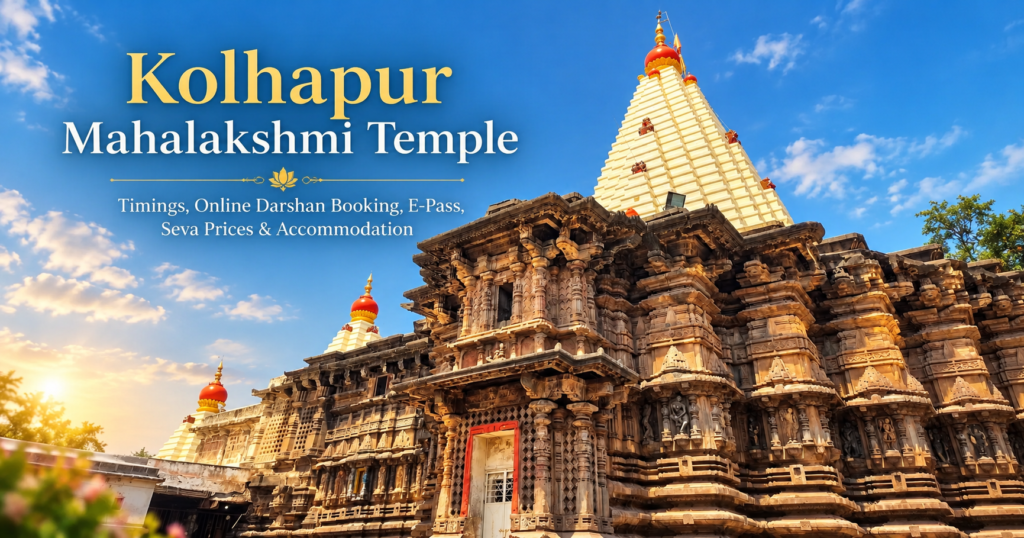
Kolhapur Mahalakshmi Temple 2026: Key Details
| Temple Detail | 2026 Information |
|---|---|
| Official Name | Shri Mahalakshmi Temple, Kolhapur |
| Popular Name | Ambabai Temple |
| Location | Kolhapur, Maharashtra |
| Main Deity | Goddess Mahalakshmi / Ambabai |
| Religious Importance | Revered Shakti Peetha |
| Temple Opens | Around 4:00 AM |
| Kakad Aarti | 5:30 AM–6:00 AM |
| Morning Mahapuja | Around 8:00 AM |
| Alankar Pooja | Around 1:30 PM |
| Dhoop Aarti | Around 8:00 PM |
| Shej Aarti | Around 10:00 PM |
| Temple Closes | Around 10:30 PM |
| General Darshan | Available |
| Online Darshan / E-Pass | Available through the temple system |
| Major Festivals | Navratri, Diwali & Margashirsha celebrations |
| Famous Temple Event | Kirnotsav |
| Official Website | https://mahalaxmikolhapur.com/ |
For a regular darshan visit, early morning is usually the most practical time if you also want to attend Kakad Aarti or complete darshan before daytime crowds increase.
Crowds can be heavier on Fridays, weekends, Navratri and other major festival dates, so visitors travelling specifically for a pooja or aarti should plan around that ritual’s timing rather than relying only on the temple’s overall opening hours.
Kolhapur Mahalakshmi Temple Timings and Pooja Schedule 2026
Kolhapur Mahalakshmi Temple opens around 4:00 AM and remains active until approximately 10:30 PM, with several poojas and aartis taking place throughout the day.
| Ritual / Temple Activity | Approximate Timing |
|---|---|
| Temple Opens | 4:00 AM |
| Padyapuja and Mukhmarjan | 5:00 AM |
| Kakad Aarti | 5:30 AM–6:00 AM |
| Morning Mahapuja | 8:00 AM |
| Naivedya | 9:30 AM |
| Afternoon Mahapuja | 11:30 AM |
| Alankar Pooja | 1:30 PM |
| Dhoop Aarti | 8:00 PM |
| Shej Aarti | 10:00 PM |
| Temple Closes | Around 10:30 PM |
Darshan is available across much of the day, but queue movement may slow temporarily during major poojas, Naivedya, aarti and other ritual activity.
Best Time for Morning Darshan
For devotees who prefer an early visit, 4:00 AM–8:00 AM is one of the most useful periods.
This window is suitable if you want to:
- attend Kakad Aarti
- complete darshan before daytime crowds increase
- visit during cooler morning hours
- keep the rest of the day free for other places in Kolhapur
If Kakad Aarti is your main priority, reach the temple before 5:30 AM rather than joining the queue at the scheduled start time.
Kolhapur Mahalakshmi Temple Evening Darshan
For evening worship, around 7:00 PM–10:00 PM is a practical planning window.
This period includes the 8:00 PM Dhoop Aarti and leads into the final Shej Aarti around 10:00 PM.
Evening darshan can be more crowded on Fridays, weekends and important religious dates, so visitors attending specifically for an aarti should allow extra time for security and queue movement.
Kolhapur Mahalakshmi Temple Kakad Aarti Timing
Kakad Aarti is held around 5:30 AM–6:00 AM and is one of the temple’s important early-morning rituals.
For devotees specifically visiting for Kakad Aarti, the useful planning point is not simply the aarti time—it is when to arrive.
Try to be at the temple before the scheduled start so there is enough time for:
entry checks → queue movement → reaching the darshan area → Kakad Aarti
This is especially useful on Fridays, weekends and festival periods when the early-morning queue may build faster.
Kolhapur Mahalakshmi Temple Online Darshan Booking and E-Pass 2026
Devotees can use the temple’s online darshan / e-pass facility to plan a visit to Kolhapur Mahalakshmi Temple in advance.
Official website:
Online booking can be especially useful during high-crowd periods such as:
- Fridays
- weekends
- Navratri
- Diwali
- Margashirsha month
- public holidays
- other important temple dates
Available dates and time slots may vary according to the temple schedule and crowd-management arrangements.
How to Book Mahalakshmi Temple Kolhapur E-Pass Online
- Open the official Kolhapur Mahalakshmi Temple website.
- Choose the available Online Darshan / E-Pass option.
- Select the required visit date.
- Choose an available darshan time slot.
- Enter the devotee details requested by the system.
- Review the date, time and visitor information.
- Submit the booking.
- Save the generated e-pass or confirmation for entry verification.
If the system provides a QR code, keep it accessible on your phone or carry a clear copy.
Details Required for E-Pass Booking
Depending on the current booking form, devotees may be asked to provide:
- Full name
- Age
- Gender
- Mobile number
- Identification details
- Number of visitors
Enter the information carefully because the details may be checked during entry.
When Should You Reach the Temple?
If your e-pass shows a specific reporting or darshan time, reach the temple approximately 15–20 minutes early.
This gives time for:
security check → e-pass verification → queue entry → darshan
During Navratri, Fridays and other high-footfall periods, allow additional time because entry queues can build even for devotees with an advance booking.
Is Kolhapur Mahalakshmi Temple Darshan Free?
Regular darshan and separately priced poojas or sevas should not be treated as the same service.
Devotees searching for a Mahalakshmi Temple darshan ticket price or Ambabai Temple entry fee should first check whether they are looking for normal darshan, an e-pass, or a specific paid religious service.
An e-pass is primarily a darshan-planning and crowd-management facility and should not automatically be described as a paid pooja or seva ticket.
Does Kolhapur Mahalakshmi Temple Have VIP Darshan?
Visitors may encounter references online to VIP darshan, special entry or priority darshan, but these terms should not automatically be treated as one permanent standard ticket category.
If a special-entry facility is available for your visit date, use only the option shown through the official temple system or authorized temple arrangements.
For most visitors, the more useful strategy is to:
- choose a less crowded darshan period
- use the available e-pass facility
- arrive before the reporting time
- book any required pooja or seva separately
This avoids confusing general darshan, e-pass entry and paid religious services as if they were the same product.
Kolhapur Mahalakshmi Temple Seva and Pooja Prices 2026
The daily pooja and aarti timings have already been covered in the temple-timings section above. For devotees planning a paid ritual, the more useful information here is the type of seva and its current listed price.
| Seva / Pooja | Approximate Listed Price |
|---|---|
| Puran Poli Naivedya | ₹300 |
| Padya Pooja | ₹350 |
| Kumkum Archana | ₹550 |
| Panchamrut Abhishek | ₹750 |
| Mahabhishek | ₹1,100 |
| Shashwat Pooja | ₹11,000 |
These figures are useful for planning, but the amount displayed by the temple at the time of booking should be treated as final.
Which Mahalakshmi Temple Pooja Should You Choose?
The right option depends on what kind of worship you want rather than simply choosing by price.
Puran Poli Naivedya is a food offering associated with the local Maharashtrian devotional tradition of Goddess Ambabai.
Padya Pooja is a direct devotional offering and is one of the lower-priced paid pooja options.
Kumkum Archana is suitable for devotees specifically seeking an archana dedicated to Goddess Mahalakshmi rather than only general darshan.
Panchamrut Abhishek and Mahabhishek are Abhishek-oriented services and should be planned according to the temple’s current ritual schedule and booking instructions.
Shashwat Pooja is a higher-value long-term religious arrangement rather than an ordinary one-time darshan add-on. Devotees considering it should check the exact conditions and benefits before payment.
Before Booking a Seva
For any paid pooja, confirm the:
- current price
- booking method
- reporting time
- number of devotees allowed
- whether advance booking is required
- any dress or ritual instructions
This matters especially for Abhishek and higher-value poojas, where the participation process may differ from a simple archana or naivedya offering.
Best Time to Visit Kolhapur Mahalakshmi Temple
The best time to visit Kolhapur Mahalakshmi Temple depends on whether you want easier darshan, comfortable weather or a major festival experience.
For a relatively less crowded visit, choose an ordinary weekday outside major festival periods. As covered in the temple-timings section, early morning is usually the most practical period for devotees who want to complete darshan before daytime crowds increase.
For weather, October to February is generally the most comfortable season for visiting Kolhapur and combining temple darshan with other places in the city.
Friday Crowd at Ambabai Temple
Fridays are especially important for Goddess worship, so Ambabai Temple generally receives more devotees than on an ordinary weekday.
If Friday is your preferred day, allow additional time for:
- darshan queues
- security checks
- pooja or seva reporting
- traffic around the temple area
Avoid planning a tightly timed onward journey immediately after darshan.
Navratri at Kolhapur Mahalakshmi Temple
Navratri is one of the most important festival periods at Ambabai Temple and attracts significantly larger crowds than a normal visit.
Devotees can expect:
- special poojas and religious programmes
- festival decoration
- longer darshan queues
- heavier traffic around the temple
- increased demand for nearby accommodation
Navratri is an excellent period for devotees who want the full festival atmosphere, but it is not the easiest choice if your main priority is a quick or comparatively peaceful darshan.
Margashirsha Month at Mahalakshmi Temple
Margashirsha is another important period for Goddess Mahalakshmi worship, with auspicious days and Thursdays attracting additional devotees.
During this period, demand can increase for:
- darshan
- poojas and sevas
- nearby accommodation
Visitors travelling specifically during Margashirsha should allow more time than they would on an ordinary weekday.
Kirnotsav at Kolhapur Mahalakshmi Temple
Kirnotsav is one of the most distinctive events associated with Kolhapur Mahalakshmi Temple.
During this solar phenomenon, rays of the setting sun enter the temple and illuminate the deity because of the temple’s architectural alignment.
For devotees and visitors, Kirnotsav is different from an ordinary darshan day because the experience depends on both the temple calendar and natural sunlight conditions.
If Kirnotsav is the main reason for your visit:
- plan according to the temple’s announced dates
- arrive well before the expected solar event
- expect larger-than-normal crowds
- allow extra time for entry and queue movement
- remember that cloud cover or weather can affect visibility
The event attracts devotees as well as visitors interested in the temple’s architecture, making it one of the most searched and visually distinctive periods to visit Ambabai Temple in Kolhapur.
Kolhapur Mahalakshmi Temple History
Kolhapur Mahalakshmi Temple is an ancient Shakti shrine associated with the long religious history of Kolhapur and the Deccan.
The temple is commonly traced to the early medieval period, with later rulers and dynasties contributing to its development over time.
Its massive stone construction, carved pillars and traditional temple architecture reflect Kolhapur’s importance as a historic centre of Goddess worship.
The presiding deity, Goddess Mahalakshmi, is locally and affectionately worshipped as Ambabai, which is why the temple is widely known as Ambabai Temple in Maharashtra.
Why Is Mahalakshmi Temple Called Ambabai Temple?
Ambabai is the popular local name used by devotees for Goddess Mahalakshmi at Kolhapur.
So searches such as:
Ambabai Temple, Mahalaxmi Temple Kolhapur and Mahalakshmi Temple Kolhapur
generally refer to the same famous shrine.
There is no need to treat Ambabai Temple as a separate temple from Kolhapur Mahalakshmi Temple.
Kolhapur Mahalakshmi Temple Dress Code
For a normal temple visit, wear clean, modest and respectful clothing.
Traditional Indian attire is especially suitable for devotees participating in a pooja, archana or other religious service.
Good options include:
- saree
- salwar-kameez
- kurta-pyjama
- dhoti
- other full-length modest clothing
Avoid outfits that are excessively short, revealing or unsuitable for a religious place.
If a particular pooja has additional dress requirements, follow the instructions provided for that service.
Mobile Phones, Cameras and Bags at Mahalakshmi Temple
Photography and electronic-device rules can be stricter in sacred areas near the sanctum.
Visitors should follow the instructions displayed at the temple entrance regarding:
- mobile-phone use
- photography
- video recording
- cameras
- bags and personal belongings
To make entry and darshan easier, avoid carrying large bags, professional camera equipment or unnecessary valuables.
Do not assume that permission to carry a mobile phone means photography is allowed everywhere inside the temple.
Facilities for Senior Citizens and Differently-Abled Visitors
Senior citizens and devotees with mobility difficulties should ask for the current assistance arrangements at the official temple entry or help point.
Depending on the arrangements available on the day, assistance may include:
- wheelchair support
- queue assistance
- separate or managed entry arrangements
- help from temple staff
Families travelling with an elderly or differently-abled devotee should reach with enough time to ask about the appropriate entry route before joining the main queue.
Avoid relying on unofficial agents claiming to provide guaranteed priority access.
Kolhapur Mahalakshmi Temple Accommodation
Visitors staying overnight in Kolhapur generally have two practical choices:
- Pilgrim / Dharamshala-style accommodation
- Hotels and lodges near Mahalakshmi Temple
The right option depends mainly on budget, comfort and whether you want to attend an early-morning ritual such as Kakad Aarti.
Mahalakshmi Temple Dharamshala and Pilgrim Stay
Simple pilgrim accommodation is available around the temple area for devotees looking for a more economical stay.
These rooms are generally basic and focused on pilgrimage needs rather than hotel-style facilities.
Online booking may not always be available for every Dharamshala option, so visitors may need to enquire directly at the relevant accommodation counter.
During Navratri, Margashirsha, weekends and major temple events, pilgrim rooms can fill quickly.
If staying specifically for an early-morning darshan or Kakad Aarti, choosing accommodation close to the temple can make the visit much easier.
Hotels Near Kolhapur Mahalakshmi Temple
Central Kolhapur has a wide range of:
- Budget lodges
- Family hotels
- Mid-range accommodation
- Premium hotels
For most first-time visitors, the most useful factor is distance from the temple, not simply the hotel category.
Staying within easy reach of Ambabai Temple is especially useful if you plan to:
- attend Kakad Aarti
- visit the temple more than once
- return for evening Dhoop Aarti
- avoid repeated local travel during crowded festival periods
How to Reach Kolhapur Mahalakshmi Temple
Mahalakshmi Temple is located in central Kolhapur and can be reached by train, bus, car and air.
By Train
Chhatrapati Shahu Maharaj Terminus, Kolhapur is the principal railway station serving the city.
From the railway station, devotees can continue to Mahalakshmi Temple by:
- Auto-rickshaw
- Local taxi
- App-based cab, where available
If you are arriving specifically for an early-morning ritual, allow enough time between train arrival and temple entry rather than planning around the train schedule alone.
By Bus
Kolhapur has regular road connections with major regional cities including:
- Pune
- Mumbai
- Sangli
- Satara
- Belagavi
- Goa-region destinations
Local autos and taxis are available from major bus arrival points for the final journey to the temple.
By Air
Kolhapur Airport serves the city, although flight availability can vary depending on route and season.
Travellers who do not find a convenient direct flight can compare other regional air gateways and continue to Kolhapur by road or rail.
For a temple-focused trip, compare the total travel time to central Kolhapur, not only the airfare or airport distance.
Places to Visit Near Kolhapur Mahalakshmi Temple
If you have additional time after darshan, several well-known places around Kolhapur can be combined with the pilgrimage.
Rankala Lake
Rankala Lake is one of Kolhapur’s best-known recreational landmarks and is convenient for visitors who want a relaxed local outing after temple darshan.
It works especially well as an evening visit if your temple activities are completed earlier in the day.
Jyotiba Temple
Jyotiba Temple is another important pilgrimage destination in the Kolhapur region.
Devotees planning a broader religious trip can combine Mahalakshmi Temple and Jyotiba Temple rather than treating the journey as a single-temple visit.
Allow separate travel time because Jyotiba Temple is outside central Kolhapur.
Panhala Fort
Panhala Fort is a major historical attraction near Kolhapur and is better suited to visitors who have at least a few extra hours available.
It can be combined with a one-night or two-day Kolhapur itinerary, especially for travellers interested in both pilgrimage and Maharashtra’s history.
Planning a One-Day vs Overnight Visit
For a simple temple visit, a day trip may be enough.
An overnight stay becomes more useful if you want to combine:
Kakad Aarti → Mahalakshmi darshan → local sightseeing → evening aarti
or include places such as Jyotiba Temple or Panhala Fort without rushing.
FAQs
What are Kolhapur Mahalakshmi Temple timings in 2026?
The temple generally opens around 4:00 AM and closes around 10:30 PM, with several important poojas and Aartis during the day.
What time is Kakad Aarti at Mahalakshmi Temple?
Kakad Aarti is generally held from around 5:30 AM to 6:00 AM.
Is Kolhapur Mahalakshmi Temple darshan free?
General temple darshan is available separately from paid poojas and sevas.
Can Mahalakshmi Temple darshan be booked online?
The temple provides an online darshan / e-pass facility through its official digital system.
What is the official Kolhapur Mahalakshmi Temple website?
The official website used in the temple information is:
How can I book a Mahalakshmi Temple e-pass?
Open the official website, choose the available online darshan or e-pass service, select your date and time, enter devotee details and save the generated confirmation.
Is an e-pass compulsory for Mahalakshmi Temple?
Requirements can depend on the date and crowd-management system. Check the current temple arrangement before visiting rather than assuming an e-pass is mandatory every day.
Is VIP Darshan available at Kolhapur Mahalakshmi Temple?
Special access arrangements may operate according to temple conditions, but visitors should use only options officially offered by the temple rather than buying unauthorized VIP packages.
What is Padya Pooja price?
The listed price is approximately ₹350.
What is Kumkum Archana price?
The listed price is approximately ₹550.
What is Panchamrut Abhishek price?
The listed charge is approximately ₹750.
What is Mahabhishek price?
The listed Mahabhishek price is approximately ₹1,100.
What time is Dhoop Aarti?
Dhoop Aarti is generally performed around 8:00 PM.
What time is Shej Aarti?
Shej Aarti is generally performed around 10:00 PM.
Which day is most crowded at Mahalakshmi Temple?
Fridays, weekends and major festival dates generally attract larger crowds.
What is the best time for peaceful darshan?
An ordinary weekday early morning is generally the easiest choice.
What is Kirnotsav at Mahalakshmi Temple?
Kirnotsav is the temple’s famous solar event when sunlight enters the shrine and illuminates the deity according to the temple’s architectural alignment.
Is accommodation available near Mahalakshmi Temple?
Yes. Pilgrim accommodation, Dharamshalas, budget hotels and other stays are available around central Kolhapur.
Which railway station is nearest to Mahalakshmi Temple?
Chhatrapati Shahu Maharaj Terminus, Kolhapur is the city’s main railway station.
What should I wear at Mahalakshmi Temple?
Wear clean, modest clothing suitable for a religious place. Traditional Indian clothing is especially appropriate for pooja participation.
Final Thoughts
A Kolhapur Mahalakshmi Temple visit in 2026 is easy to plan once you know the key timings and decide whether you want only general darshan or a specific pooja.
The temple begins its daily schedule around 4:00 AM, with Kakad Aarti at approximately 5:30 AM, major poojas throughout the day, Dhoop Aarti around 8:00 PM and Shej Aarti around 10:00 PM.
If you are visiting on an ordinary weekday, early morning is generally the simplest time for darshan. For Fridays, Navratri, Margashirsha or Kirnotsav periods, keep extra time for queues and accommodation.
Visitors planning a seva should choose the exact pooja they want rather than treating every paid service as a VIP darshan ticket. For online darshan or e-pass arrangements, use the official Mahalakshmi Temple system and check the current facility for your actual visit date.